

What Do You Do When the 'To-Dos' Are Gone?
For more than 40 years I was moving because someone needed me to. Then they didn't. The stillness was frightening.

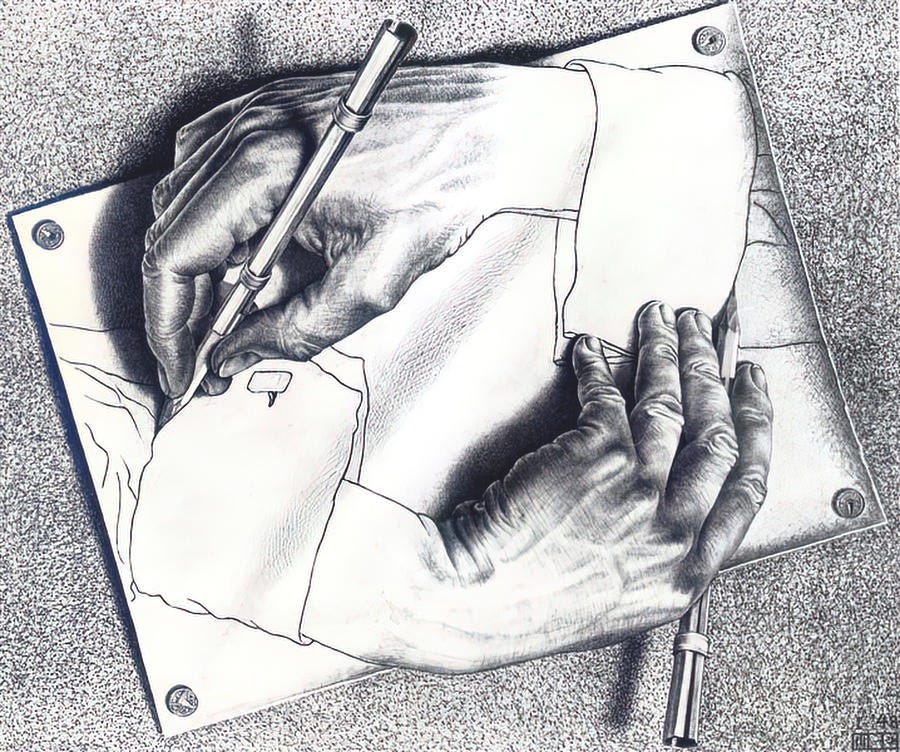
As long as there was motion – the oscillation of life – I was fine. But once movement stopped, a vacuum of nothingness consumed me.
What reason was there to get out of bed in the morning?
Elizabeth Vealey, host of the podcast Empowering Women, asked me:
“Tell me about a time when you knew you had to make a change? How did you know?”
Wow. That stumped me.
I cycled through a variety of upending moments – moves, layoffs, marriage, babies, more layoffs, industries decaying, parents dying, some health issues – and dismissed all of them. I came to the conclusion that being alive at 65 means having faced a lot of changes. That doesn’t make me unique or in any way a survivor.
It makes me human.
As I thought through all of those abrupt cataclysmic moments that forced me to transition – it dawned on me that the underlying motivation was always external. The kids needed feeding. The mortgage required payments. Tuitions were due. I pivoted because I had to – and because other people depended on me.
The real change came at age 62. The kids were grown, the mortgage was manageable, the tuitions were in the rear-view mirror. I was laid off again and at the depths of despair, empty nesting, menopause, and just flailing.
What do you do when the to-dos are gone?
For the first time – since I was a child – I needed to find an internal driver.
The author and anthropologist Mary Catherine Bateson termed this transitional life stage as Adulthood II. The heart of her book “Composing a Further Life,” is to redefine identity in the face of cultural and physical changes.
How do I grow older and remain myself – or rather, how in growing older do I become more truly myself…
— Mary Catherine Bateson, “Composing a Further Life”
During Adulthood I, our priority is on nurturing community, family, and work (not necessarily in that order). The prequel to Adulthood I is adolescence, where we wrestle with identity and role confusion – all while under the influence of out-of-control hormones.
That's when Bateson’s words stopped me. She suggested this stage may require revisiting adolescence.
Where was the 12-year old who wanted to be a journalist like Woodward and Bernstein? Where was the writer who was masked by a variety of different titles? Could I find her?
In searching through my family history, I found a woman who had experienced something similar. I like to believe we found each other.
Leonora Kearney Barry pivoted from being a farmer’s daughter to being a musician’s wife. With his untimely death, her small children needed to be fed. To feed them, she endured working in hellacious factories, and found herself lobbying for better wages and conditions. A whole string of to-dos.
What little we know of Leonora states that after leaving the Knights of Labor in 1889, she remarried and stayed at home to care for her children and new husband.
But that’s not what happened at all. She may have remarried – and retired from the Knights – but she didn’t remove herself from public life.


For the next 40 years, as Mrs. Leonora Lake, she focused on an entirely different mission – one that had her being a highly sought after speaker on the Chautauqua and Lyceum circuits, a leader with the Catholic Total Abstinence Union of America, and involvement with a residence for single working women – the original affordable housing, if you will.
That’s the thing about scaffolding. It’s meant to be a temporary frame. It’s when it is removed that the real structure reveals itself.
When the scaffolding came down at 62, I didn’t know yet what the structure underneath looked like. So I went looking for a woman who figured it out 140 years ago.
The silence was frightening.
And then it wasn’t.
Every Friday, I follow the threads that remain when the scaffolding comes down — lost histories, unexpected mirrors, and women who weren’t done yet.
A year ago…
I wrote about another woman who found her internal driver. My Nana, a census-listed homemaker who logged 700 volunteer hours in a single year and was still calling elderly shut-ins into her nineties. If you missed it, it’s worth a read.
The Real Trad Wives of the 20th Century (Inspired by My Nana)

My husband caught me in my domestic act—stirring a leek and potato soup simmering on the stove while a loaf of rye sourdough was baking in the oven. He smirked and said, “What are you, a trad wife now?”
What I’m Reading
The HeLa cells revolutionized medicine. They also were extracted from a real person. I’m immersed in Rebecca Skloot’s The Immortal Life of Henrietta Lacks — which feels a little ironic given what I’m working on. Skloot spent years recovering a woman who was erased from her own story — her own body parts. I know something about that quest. She braids the gains made by the science community with the losses felt by the family.
Some books find you exactly when you need them.
Curious, who in your family tree might be holding an answer you haven’t thought to look for yet?
That’s it for this week!
Looking for the light, always,
xoxo
Diane
Excellent read. Your writing comes from a deeply honest place.
I love this Di. The question 'what do you do when the to-do's are gone?' really made me stop and think.' I've had a few moments like this. Perhaps it could be a good place to start those memoir posts that I've been promising myself to do. Thanks for making me think. Also, I do love that Leonora has made a reappearance.