



How Do You Find an Audience?
If you are spending hours researching family - you deserve to have a loyal audience to read your body of work. I’ve put tips together to help you cultivate an audience that will be loyal to you.
As a family historian you have deep knowledge of your subject and want to impart that knowledge to others. In fact, you may want to target a specific reader who looks very much like a former you — the you before you became an expert.
What were you like before you started this journey? Curious about religion? A certain era? The clothing? The social movements? Looking to solve a mystery?
Chances are that your passion will attract others.
Starting From Scratch
When I first started out, I didn’t want to stare at an empty Substack – and populated it with pieces from my brand publishing background. That attracted some people who knew me. But that’s not the type of writing I wanted to pursue. I didn’t want to be the authority – I wanted to be more introspective and share a journey.
I had to figure out how to attract people who would find that compelling. I found an ancestral relative who really spoke to me. She was a widowed mother, thrust into the job market, climbed her way to the top of a national union to fight for labor reform – and yet her past was virtually erased by historians. Boy, could I relate. Leonora Kearney Barry is an ancestor who I often use as a touchstone in my work.
The same ancestor, the same research, can open completely different doors for completely different readers.
Depending on the day and the reader, she is a mystery — who was this woman and why did history bury her? She is an era piece — what did it cost to be a working woman in Gilded Age America? She is a movement story — the rise and fall of the Knights of Labor. She is a grief story — a widow with three small children who had to reinvent herself or starve.
Same woman. Same archive. Four different doors. Four different readers waiting on the other side.
Your ancestor has doors too. Deciding which one to open before you write the first sentence will determine your tone, your structure, and ultimately whether your story finds the audience it deserves.
Shifting Perspective
A useful exercise is to conjure several personas who might be interested in your work. Be specific. Imagine someone coming across your writing. Is it through word of mouth — a parent, a friend, a fellow genealogist? Are they finding you through Google, Substack Notes, Instagram?
What’s going on in their lives that’s making them seek you out? What’s their mood? Marketers call it “pain” — as a writer, I prefer the term “mood.” A reader looking for humor will want something very different from one looking to reclaim a lost piece of identity. Both are valid. Both are yours to write for.
And remember: audiences are not a monolith. We have good days and bad days. The same piece can feel like a hill to climb or a reason to curl up with tea, depending on the reader’s state of mind. You can’t control that — but you can write with enough warmth and specificity that most readers find their way in.
Become a Virtual Anthropologist
What if you – and your audience – are sticklers for details but you have gaps? This is almost inevitable — records don’t get written down, get destroyed, get distorted.
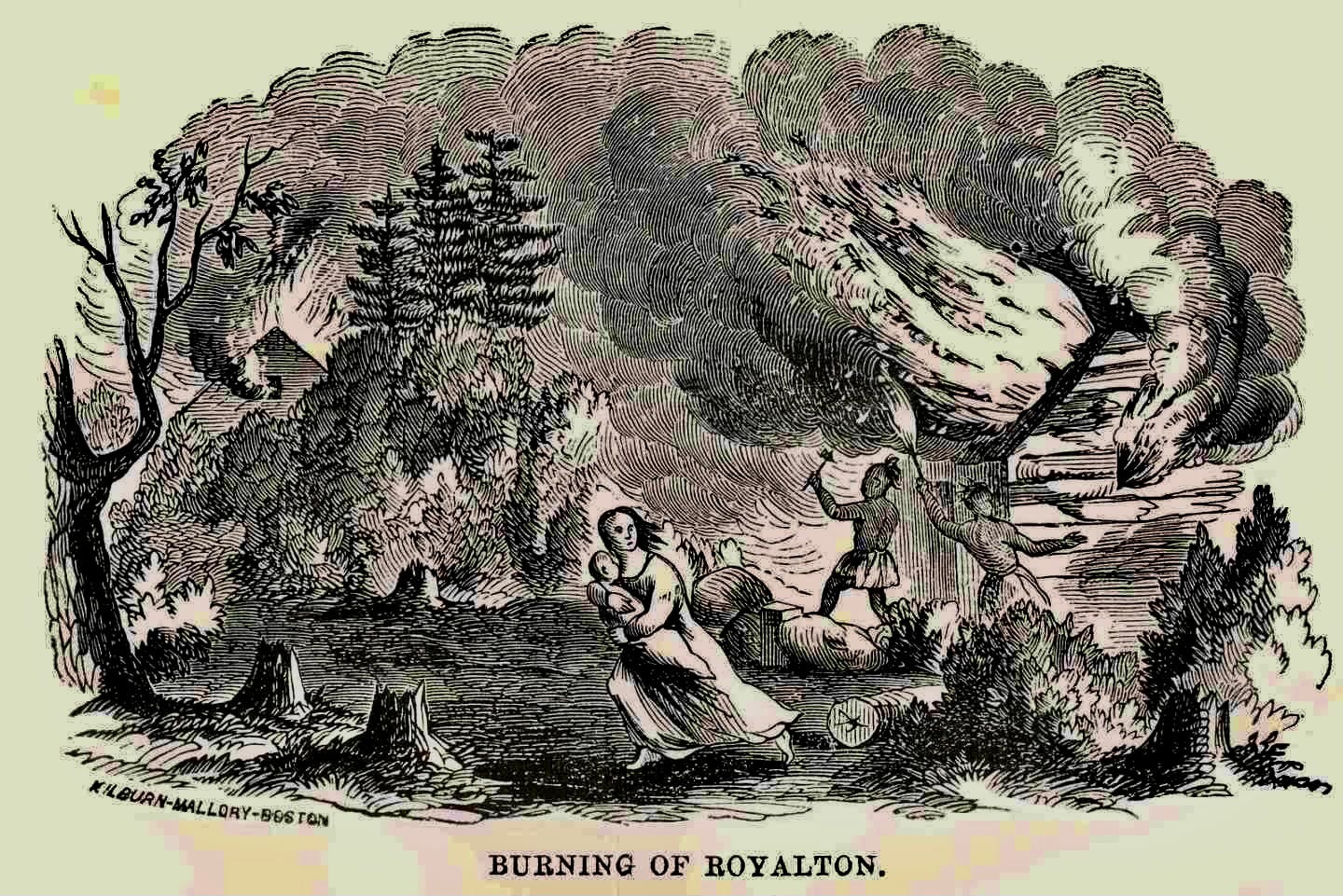
A technique I use when developing a piece is to place myself inside the scene. When I wrote about Lucy (Anna) Durkee grabbing her baby and fleeing an Indian raid, I thought about what it felt like to leave home in a panic with a child that age.
She didn’t have a 21st century diaper bag — but she could throw items onto a tablecloth and bundle it. What would she need to survive? A tin cup for creek water, a mending kit, a loaf of bread, some liniment, a cloak — and a sock to put in the baby’s mouth so it didn’t cry.
When I wrote about William Barry — Leonora’s first husband — I had only an obituary. Not even a birth certificate.
But I had enough: cornet player, composer, bandleader, nine years in the British Army out of Canada, house painter, died of consumption in spring 1881. Census records showed he wasn’t working the last four months of 1880 — so his illness spanned at least eight months.
Newspaper clippings mentioned solos he played, bands he led, venues where he performed. Since music defined him, I made it the focal point — and leaned into the importance of military band music in the 1880s. From there I could reasonably infer how he was regarded in his community.
That level of grounded detail is how you authentically connect with your audience — even across the gaps.
Building a Periodical
Whether you are compiling essays, building picture books, or just capturing charts and graphs, you are in essence, building a periodical. Not all pieces may interest all visitors. That’s okay. I love cooking sites and while I may not like every recipe, I return to the site because I know it meets my needs.
So how will you know if you are meeting your readers needs? Read the comments and look at your subscribers. There is a lot to learn if you look at the sites they visit. Over time, you will see what works.
Your Audience Is Always Changing
Taking a pulse is never a one-and-done. Stay engaged with the people reading your work so they stay engaged with you. When someone comments, thank them — and mean it. Seek out publications similar to yours and engage with their communities. Read what your readers are reading.
Understanding your audience is a vital step — but it’s also an ongoing conversation. The more you listen, the better you’ll write.
So, before your next piece: which door are you opening? And who’s waiting on the other side?
Thank you for the great ideas!
Great piece. And because the audience continues to grow and change, it's never a once-and-done.