

The Family Tree Doesn’t End. The Index Does.
A dive into RootsTech, celebrity cousins, archival gaps, and the surprising fragility of family graphs. What happens when one branch explodes — and the rest sit in the dark?

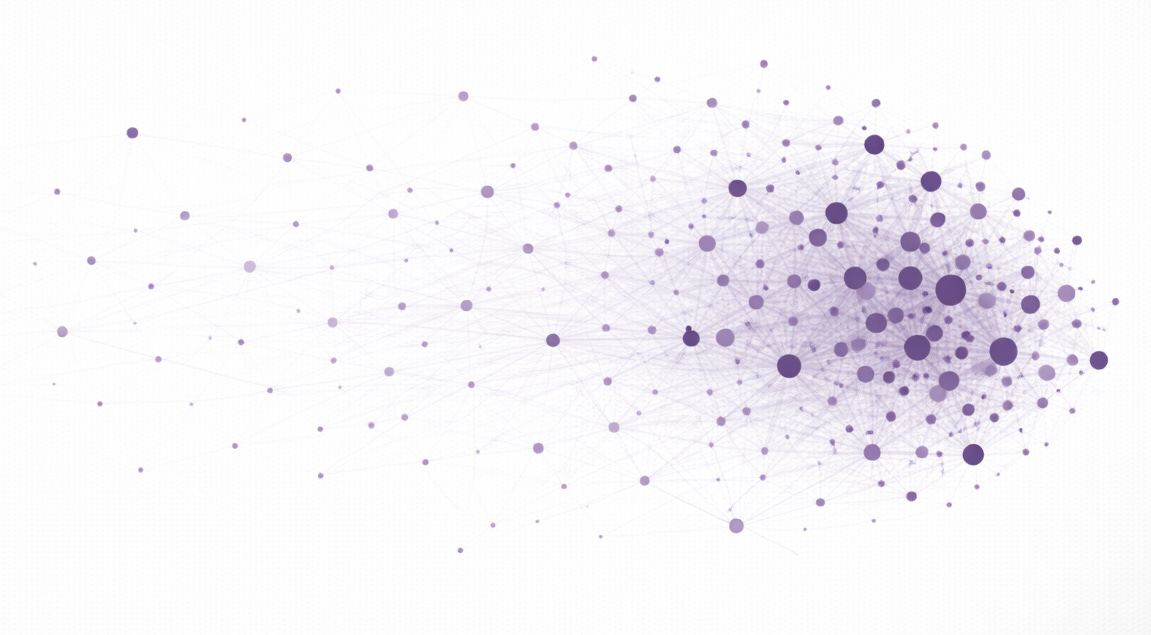
At the urging of Substack friends, I registered for RootsTech on FamilySearch and discovered thousands of cousins. At first, the number seems surprising. But then I realized, so many more were missing. “Finding cousins” is about record visibility and indexing. Here’s what’s really happening.
“Hi cousin!” one family historian called out to another at a precursor event for the annual RootsTech conference.1 Intrigued, I logged in to see who I might be related to.
And just as I figured, I am related to the late Queen Elizabeth.
Of course, I had to travel back 10 generations to the 16th century to our shared Dutch forbearer, the 5th Baron of Bentinck. (It was only in the past couple years I realized that I had any Dutch ancestors.)
It turns out Queen Elizabeth is not my only celebrity relative. I also share distant lines with Susan B. Anthony, Emily Dickinson, and Booker T. Washington.
I write about archives, visibility, and the quiet structures shaping our lives. If that’s your kind of thinking, join me — it’s free!
Was this what I was looking for? Trying to find who I am connected to?
Not really. In actuality, I was looking for new connections to my ancestor, labor activist, Leonora Kearney Barry. She is a 2nd cousin three times removed. Unfortunately, just like with all the other genealogy sites, I fell short of my goal.
How does RootsTech find cousins?
Still, I did find it interesting that out of the more than 160,000 participants at RootsTech I am related to more than 4,100 of them.2
The number seemed crazy until I remembered, all of us have:
2 parents
4 grandparents
8 great-grandparents
16 great-great
32 great-great-greats
… by the time you go back 10 generations, there are over 1000 relatives in a single generation.
Then I noticed that my nearest relative was a 5th cousin – meaning my first connection appears six generations back (my 4x great grandparents) where the maximum total of couples is 32.
The numbers compound fast.
But again, I spot an anomaly. In that 6th generation, only four couples are indexed – and two are sisters. Out of sixty-four possible ancestors in that generation; eight people are generating more than four thousand visible connections.
The rest of my branches sit in the dark. What stories hide within the fifty-six?
Why are some branches missing on FamilySearch?
My father’s family are Italian Catholics – with clear lines of ancestors to the 17th century. My mother’s ancestors are Irish Catholics save for a great grandmother who had the foresight to marry a Protestant – and convert him to Catholicism.
None of the Catholic relatives are represented in my cousin total. The collapse isn’t biological. It’s archival.
Now I am intrigued.
Years ago, I was with a high-tech company that helped analysts find knowledge in dark – or hidden data. It’s the type of data that is typically ignored because it doesn’t fit a schema. It is the stray column of notes in a spreadsheet that says the drug made her sick. It isn’t that the data isn’t valuable – it’s just inconvenient to work with.
One solution is to graph facts using triples: a subject, a predicate, and direct object.
When relationships between entities are defined by predicates, hidden associations surface. A predicate does not create a relationship; it clarifies one.
One indexed ancestor becomes a hub.
One unindexed ancestor remains a dot.
The tree doesn’t end. The index does.
I’ve spent more than three years trying to find facts that address Leonora. In her case, I had (among other things):
Leonora Barry – drafted – Pennsylvania Labor Bill
Pennsylvania Labor Bill – became – State Law
State Law – regulated – Industrial Conditions
Industrial Conditions – affected – Women and Children
The gaps are what motivated me to look for more.
In the three-and-a-half years as a National Inspector for the Knights of Labor, Leonora visited hundreds of factories and mills recording their conditions and filing reports. She wasn’t just an onlooker to history, she played a central role. With Leonora, the records weren’t absent. They were dispersed. Under Barry, under her (remarried name) Lake, under the Knights of Labor.
Once the names were reconciled, the arc of her work burst.
Graphs result from a dedication and commitment to recording facts. RootsTech is affiliated with the LDS Church, whose longstanding commitment to genealogical preservation has produced one of the most extensive digital family archives in the world. The RootsTech graph reflects that devotion.
My Catholic ancestors were bound by the parameters of a parish. Italian records have been preserved for centuries but are rarely digitized. Irish Catholic records were often fragmented or destroyed.
It wasn’t until a relative crossed the religious barrier and married a Protestant that my archives exploded. I didn’t find a relationship to Queen Elizabeth because of royal blood lines – I found it because the records stayed intact.
Even now, someone has attached the wrong great-grandmother to my tree. I can see her there — a woman I know is not mine — and I have yet to figure out how to unlink her. The graph expands. It also errs.
a year ago …
I found a quote I wrote in a piece I did last year:
Power is about controlling others. Agency is about controlling yourself. And history has shown that the latter, when exercised collectively, can challenge even the most entrenched systems of power.
It seems like a wonderful reminder when power seems to have gone amok.
Tugging at the Leash: How I Chose Agency Over Power

It’s been a master class of late to watch people in power wield it to try and make others feel out of control. But ironically, those without power may have more control —if they recognize their own agency.
Winter Storms & Time Travel
The blizzard on the Eastern seaboard took down power lines leaving us cold and in the dark. Right after the poewr was restored, the furnace died. That one-two punch transported us to the 19th century, where yet again I wonder how our forbearers survived. Three days of bench-pressing my body weight in clothes, and having the words “I’m cold” permeate every thought. I couldn’t even conjure up a good hot flash.
But it’s glorious today. The snow is magnifying the sun’s rays. I am bathed in the warmth.
And, I feel grateful that we were in a position to buy a new furnace.
xoxo,
– diane
That number will increase — as it attracts people until the end of April.
Very thought provoking piece. I think I will go in and analyze the religions of my 32. I suspect that will gain some insight. I also have VERY large families. And almost everyone survived. I also will look at those numbers and see how that affects my cousin count.
One of these years I hope to make the time for RootsTech. Interesting to read of your experience there. The differences in the ways lives were documented, archived, indexed are illustrated by the two sides of your family.