

The Facts Behind Faeries
Channeling Ionesco, I tackle the Sídhe, spelling reform, a warning about hawthorn trees, and scéalaí. Try to keep up.

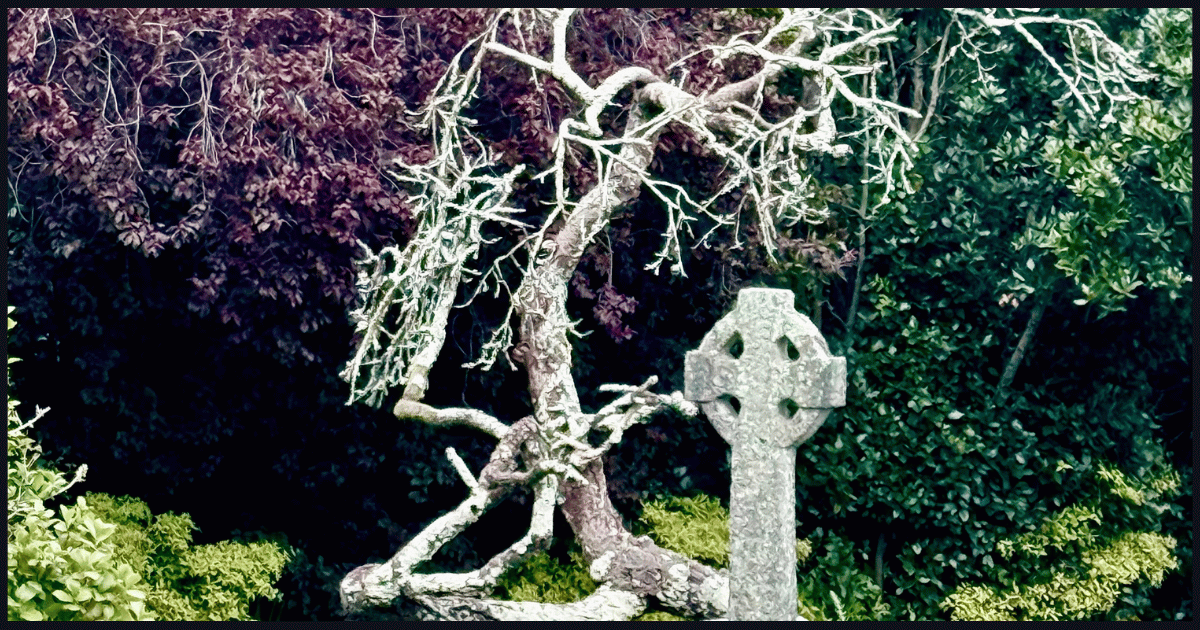
Last week I wrote how I spent months banging my head against my desk trying to keep track of all the players in Irish mythology. I don’t know that I am that much smarter, but I am fairly convinced that we Irish (wee or not) have storytelling
in our marrow.
But do we have scéalaíocht in our blood?
What is this scéalaíocht of which I speak? I can assure you, after extensive research and careful thought, that it is an art form that could not be beaten out of those of us with this predilection, despite the best efforts of English teachers and editors alike – a predilection I have now coined The Hiberno-English Loop, better known as
The Digression.
The part of the myth that I was able to keep track of was when the Tuatha de Dannan1 were defeated by a tribe of mortals – called the Milesians, largely believed to be from Iberia, who guided the Tuatha into the sídhe (ancient burial mounds) and the otherworld, although once that happened they were no longer Tuatha, which means tribe, since to be a tribe requires sovereignty – instead, according to the Christian monks, they became people of sídhe or aos sídhe, who were neither inherently bad nor good, they could be either. They moved into ringforts after people left them.
In case you are trying to keep up – the mounds were called the sídhe – as were the people who lived there – although you could write áes sidhe before 1958,2 and aos si after, because the actual powers that be – not the supernatural ones, officially changed the spelling to make the language more modern, but regardless of spelling, sídhe and sí are both pronounced as the female pronoun: she.
Tuatha – tribe
Dé – god/goddess
Danann – feminine plural of dan or Danu
Sídhe — burial mounds
aes / aos — people
aes sídhe – people of the burial mounds
sí –-a sídhe post 1958,
sídhe – diminutive for people of the burial mounds (when they get lazy, I guess)
bean sí / bean sídhe — a woman of the burial mounds
fear sí/ fear sídhe — a man of the burial mounds
Daoine Maithe: the good people
While bean sí is definitely the phonetic equivalent of banshee, don’t assume that fear-sí was the phonetic equivalent to Faerie! The latter is a French-derived word, and it was just an astounding coincidence – or maybe magic by the Sí!
You choose.
In fact, if you believe the lore, the Faeries hated the word faeries – no matter how it was spelled. They found it disrespectful. While they were short in stature, dismiss the notion that the sí were sprites with wings, glitter, or wands. Like some many of the short bosses I had, they could be malicious when irritated. But unlike those bosses, they weren’t agents of chaos. While resentful that they’d lost their standing in the mortal world, they only became triggered by injustices – like people cutting down trees, not minding boundaries, or putting up a house in the path of a ringfort. Only then would they cause havoc – which is why ringforts and hawthorn trees are left untouched. Notably, the hawthorn’s blossom gives off trimethylamine as it flowers, the same smell as a rotting carcass. Chopper-downer beware.
So, to avoid poking the bear, so to speak, rural folks called them the good people
or wee folk.
Boundaries and justice were, I am certain, a coincidental overlap with Christian homework of doing unto others, not being greedy, and feeding strangers at your door. Violations led to consequences. For centuries, the scéalaí told stories of how Dagda, the father-god, cursed the Milesians for not showing respect – and therefore made the land barren. As restitution, Dagda insisted the Milesians make a pact to completely abandon and respect the sídhe (the mounds and ringforts); declare them sovereign faery territory; and, leave regular offerings of milk, butter, and the first harvests at the boundaries of these mounds to appease the hidden gods.
Ireland’s oldest protection racket, and apparently still in effect – try convincing a farmer in Cork to plow through a ringfort.
Did the sheer scale and horror of the potato famine provoke rural folks to consider it might be another round of vengeance from the Daoine Maithe for some hideous, unremembered transgression? It’s understandable – when the alternative explanation is a fungus, blaming the neighbors who chopped down a hawthorn tree at least gives you someone to be angry at.
Isn’t that logical behavior when you feel out of control?
It was said that during the famine, Fear Gorta, the man of hunger, wandered the streets as a walking skeleton wearing tattered rags begging for food; acts of kindness were rewarded with unexpected wealth and good fortune, whereas the person who turned away in disgust was cursed with perpetual hunger. In other words: every stranger at your door might be a test, so maybe don’t be the person who slams it.
Tale or sermon. You choose.
I digress.
If you like history with a little mischief - and stories that refuse to stay on topic - subscribe to Musings of a Storyteller.
A year ago
If you are out and about and see school supplies on sale – consider asking a teacher friend if they need any – and add them to your shopping list. Often teachers are too embarrassed to ask for help – but they are only given a small amount to make an inviting learning environment. And if they are in a poorer school district, they may be subsidizing all sorts of items. I got into a bit more in this piece.
Why Learning Sticks Best When We Stick Together

Instead of my usual fresh-from-the-brain essay, I dusted off a favorite from last year –the one about glue sticks, glory, and giving our teachers what they need – and pasting it below. Tariffs and shrinking school budgets aren’t going anywhere, yet our country needs to hav…
Final Thoughts
I had so much fun writing this piece. It was labor activist Leonora Kearney Barry’s birthday this past week. It would have been her 177th. In writing about her early life, I’ve been enthralled with Irish customs and mythology; I felt I needed a stronger understanding of the child being raised by adults whose religion, language, and customs were considered illegal. How might this have shaped the woman she became?
Would love to have you weigh in!
That’s it for this week. Have a great weekend,
Looking for the light always,
- Diane
https://mythicalireland.com/blogs/news/newgrange-and-the-return-of-the-tuatha-de-danann
https://en.wikipedia.org/wiki/An_Caighdeán_Oifigiúi
I love this Di. Forgive me if I’ve already told you about The Good People by Hannah Kent. It’s a novel based on very good research by a much lovedAustralian author. Her books have sold all over the world so I’m sure it would be available. It a deep dive into a family and their view of the faeries.
Wow I learned a lot! That also explains why so many of the neolithic monuments survive to this day. We went looking for a court tomb in someone's field and a neighbor spotted us wandering up and down by the hedge, hesitating about trespassing. She said "Oh, you can go take a look, it gets a lot of visitors. but you know Mr. O'Malley has much better ones up the road."