

It Started With a Sewing Circle
How nine women in 1889 St. Louis built something that mattered — and why that instinct to fight for social change still resonates today.

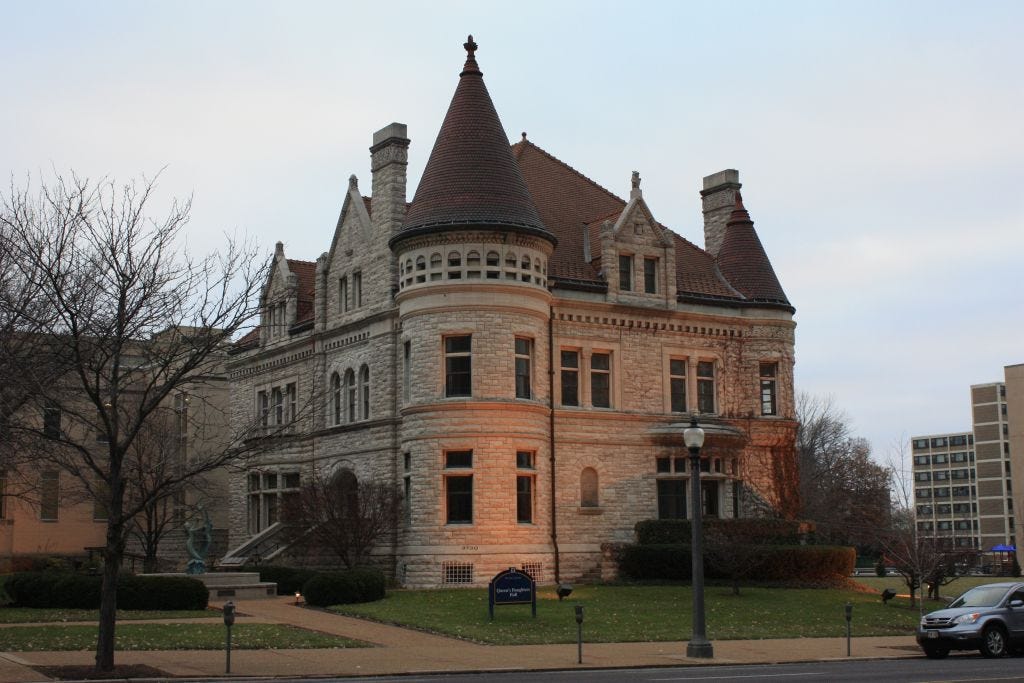
It started with a sewing circle – and nine women.
The place? Well, that depends on whether it was 1889 or 1938.
In 1889, it was Mary Hoxsey and eight others in St. Louis, Missouri, chatting about impoverishment. All the women were active with their local parishes, and under the auspices of St. Vincent de Paul, provided meals and clothing to the poor – in their homes.
But they wanted to do something more. One asked, “What if we did outreach to the children and taught them a craft – like sewing?” Another added, “what if we also instilled Catholic values of charity – so that some of what they make is given away?”
If stories like this one remind you that ordinary people do extraordinary things, subscribe to Musings of a Storyteller for weekly essays that find the remarkable in the everyday.
Someone brought up that even if young women are able to earn a living – where would they safely live? After all, the rooming houses were full of men, and worse, were often situated next to saloons and train stations where transient men might want to have their way with these women. And even if that didn’t occur – just the proximity to those men might ruin the women’s reputation.
“We need to provide safe and affordable lodging,” they determined.
And the Queen’s Daughters were born.
They started by offering free sewing lessons at a variety of locations around St. Louis, while offering catechism lessons in the homes. The circle of influence grew, including with the new Mrs. O.R. Lake – Leonora Barry.
Their work caught the attention of the Church hierarchy — Pope Leo – the XIII, gave the women’s efforts his blessing in 1894.
In 1897, they rented a building and furnished it for tenants – and included a sewing school. They integrated the students with members of the Guardian Angel Bands, the children of well-to-do parents, to assist.
In 1898, Leonora was voted Vice President, and the Queen’s Daughters reported that more than 7000 garments were made – and dispensed.
Now as to the other sewing circle …
“In 1938, nine of us, belonging to a sewing group, thought of the idea of an auxiliary for Buffalo Columbus hospital,” said my grandmother in a 1953 interview. The hospital would have two name changes, the E. Meyer Memorial in 1939, and again in 1978, when it became Erie County Medical Center, or ECMC.
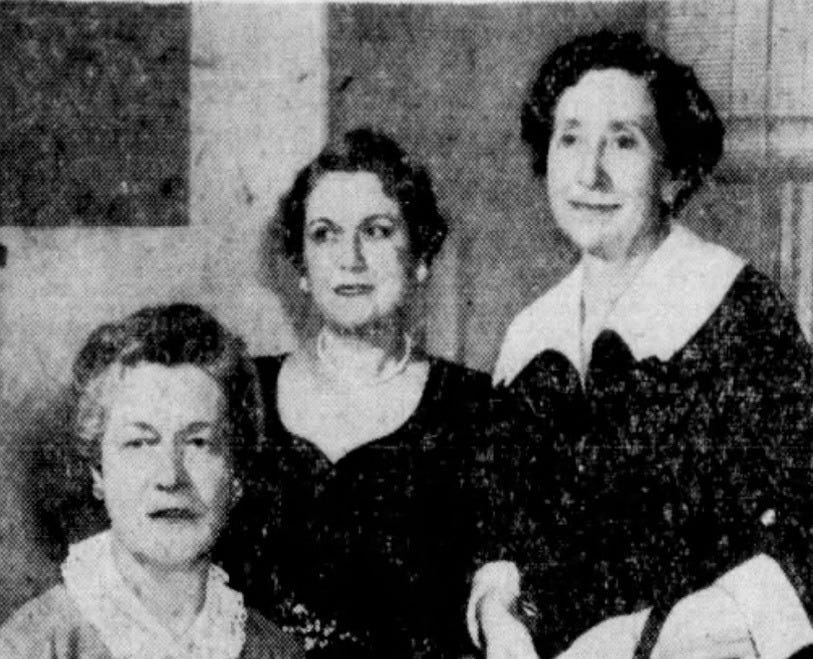
As a public hospital, the patients often were indigent. The volunteers provided slippers and robes, candy, magazines, books, and even ran errands for them. “We knew what little extras could mean to them and yearned to ease the sorrow and heartbreak that often hovers over people who are not blessed with material comfort,” Nana said in that interview.
Within a year the nine members became 25. They bought six sewing machines that kept busy making surgical masks, towels, even hospital linens. Needing a primary fundraiser, they started a coffee shop, and held dinners, dances, and teas.
Soon they were buying equipment, building wings, and providing scholarships for students at the University of Buffalo School of Medicine.
I couldn’t help but notice the pattern of well-to-do women sitting in a sewing circle coming up with ways to reinforce the fabric of society.
Do sewing circles still exist? I can’t recall being exposed to one. When did they lose popularity? What has taken their place?
I was president of our school’s PTO – and later worked with a handful of families to form an enrichment foundation for our students after severe cuts were made to the school budget that eliminated dozens of positions and all after-school activities.
Anyone who has tried to build something from nothing knows it is never as simple as nine women and a needle. It takes stubbornness, disappointment, and more meetings than anyone admits to. I only wish in my case it had reached further than the 5,000 students in our town.
It makes me wonder if what we need to repair much of what is fraying are some good old-fashioned sewing circles.
The instruments were simple: a needle and thread. They saw a need, created their own pattern – and they stitched something that didn’t exist before. No permission asked. No institution consulted. Just women in a room deciding something needed to be done.
Two of my forebear were involved – 1889 and 1938 – in different cities, different centuries, different needs. Different sides of the family. Same instinct. Same instruments.
Do you know of a philanthropic organization, a foundation, or a community group that started as something much smaller – a sewing circle, a church committee, a kitchen table conversation? Tell me in the comments.
A year ago…
The Queen's Daughters taught girls to sew and to give. My mother’s mom, Gram, taught by doing both: sewing for almost 50 people and substitute teaching. She put the needle to work – in her home. Check out the picture of the two little girls in matching navy blue jumpers made by my Gram in this essay from a year ago.
What I Am Reading
Most of my reading was old newspapers. If you are in New York State — New York State Historic Newspapers a treasure trove — and no subscription is required!
Sharp-eyed readers of this newsletter will notice a new city entering the story — Leonora Kearney Barry Lake has arrived in St. Louis.
Looking for the light, always,
- xoxo, Diane
you asked: in Duluth we have a large well-known nonprofit that helps unhoused people. The name of it is CHUM. It was started in 1973 by awhen 10 churches in Duluth’s Central Hillside neighborhood pooled their resources to meet the needs of the neighborhood’s many low-income residents.
https://www.chumduluth.org
We all benefit when we honor and continue crafts made with one's hands. Today's instant click and purchase gratification doesn't compare to the slow and thoughtful satisfaction of making something with your own hands. Those crafts are life skills that helped generations and communities. I knit, sew and cook. All of these crafts (yes, cooking from scratch is a craft) are meditative, practical and most importantly can make a big impact in our communities. Knitting a hat for a chemo patient, premmi in pediatric ICU, prepare meals at a homeless shelter and sewing clothes for those that have none. Simple, intentional efforts by everyday people are what has always sustained our communities. Thanks for reminding us with this lovely story. BTW as someone who has been in a sewing and knitting "circle," I can say that great friendships and ideas are indeed created when people come together.